
Disclosure: This article contains affiliate links. If you buy through them, we may earn a commission at no additional cost to you.
A note on scope before anything else: this article is about gardening — seeds, soil, seasons, and storage. It is not medical advice, and it does not recommend using any plant as a treatment for anything. Growing an herb and using it as a remedy are two very different decisions, and the second one belongs in a conversation with a qualified professional. More on that near the end.
There is a particular pleasure in a garden that asks little and gives back for years. Herbs are like that. Most of them are forgiving plants: they tolerate imperfect soil, they shrug off a missed watering better than vegetables do, and many of them come back on their own each spring. That is why a traditional herb garden — the kind households kept for generations, with lavender by the path and chamomile spilling out of a corner bed — is such a reasonable first garden for a beginner.
The Medicinal Garden Kit is one packaged way to start one: a single box of seeds for ten traditional herbs, plus a guide. This article looks at what is actually in the kit, how a garden like this grows across a year, and where the honest limits are. It stays on the gardening side of the fence throughout, because that is the part a seed kit can genuinely deliver.
What is in the Medicinal Garden Kit
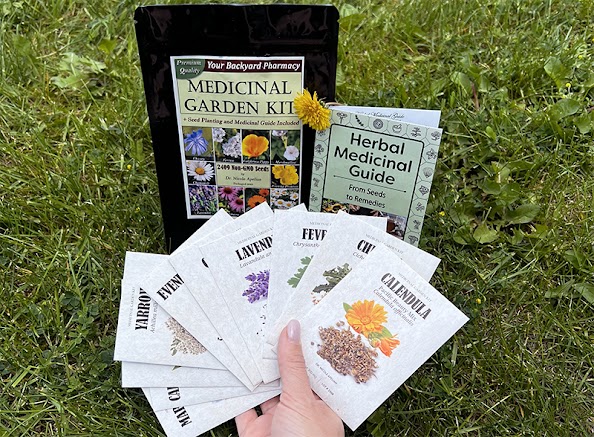
The kit is sold by the vendor bookofren through Digistore24 and was put together by herbalist and biologist Nicole Apelian. Stripped of the sales language, the box itself is simple. According to the vendor’s product page, inside you will find:
- 10 seed packets — one for each of the ten herbs listed below.
- 4,818 seeds in total, described by the vendor as non-GMO and packaged in the US.
- A free printed guide, Herbal Medicinal Guide: From Seeds to Remedies, which includes the planting, growing, and harvesting details for each of the ten plants.
- Two bonus guides included free: Healing Yourself At Home With Household Items and Wild Edible and Medicinal Herbs You Can Forage or Find Around the House.
- A 365-day money-back guarantee and vendor support, as stated on the product page.
You can see the full contents on the Medicinal Garden Kit page, which is also where the current price is shown — seed kit pricing changes with promotions, so check it there rather than trusting any article, including this one.
What the kit does not include is worth knowing too: no pots, no soil, no tools. It is seeds and paper. Everything else a garden needs, you provide.
Meet the ten plants — as plants
The ten herbs are a sensible mix for a home garden because they do not all behave the same way, and that variety spreads the work — and the interest — across the year. Here they are in gardening terms only:
- Lavender — a woody perennial grown for its fragrant purple flower spikes. Wants full sun and sharp drainage; dislikes wet feet. Slow to start from seed, then long-lived.
- Echinacea — a hardy perennial with bold pink-purple coneflowers that pollinators love. Slow and steady: expect flowers from the second year more than the first.
- Yarrow — a tough perennial with flat white or yellow flower heads. Drought-tolerant once established and spreads willingly, so give it room or a container.
- Marshmallow — a tall perennial that prefers the opposite of lavender: moist soil, even a damp corner other plants dislike.
- Chicory — a deep-taprooted plant with sky-blue flowers that open in the morning. The long root is why it is also valued as a soil builder in the garden.
- Chamomile — a light, feathery annual covered in small daisy-like flowers. It self-seeds readily, so one sowing often means volunteers for years.
- Calendula — a cheerful annual with orange and yellow blooms that keep coming for months if you pick the flowers regularly. Another generous self-seeder.
- California poppy — a drought-tolerant annual with silky orange flowers that close at night. Needs very little water once going and reseeds itself.
- Feverfew — a bushy plant with clusters of small white daisy flowers. Self-seeds freely; many gardeners grow it as much for its looks as anything.
- Evening primrose — a biennial whose pale yellow flowers open at sunset and last a single night, feeding evening moths. It takes two seasons to flower: leaves the first year, blooms the second.
Notice the pattern: most of these are perennials that return each year, or annuals that reseed themselves. That is the kit’s real gardening proposition — plant once, and the garden largely renews itself.
The growing year, season by season
Late winter and early spring: planning and first sowing. The year starts indoors and on paper. Decide where the garden will live — a sunny bed, a row of large pots, or a mix — remembering that lavender and California poppy want dry, sunny conditions while marshmallow wants moisture, so they should not share the same square metre. Some of these seeds are in no hurry: lavender and echinacea germinate slowly and unevenly, and starting them indoors six to eight weeks before your last frost gives them a head start. Chamomile and feverfew seeds need light to germinate, so they are scattered on the surface and pressed in rather than buried.
Spring: transplanting and direct sowing. Once frost has passed, seedlings go out and the easy annuals — calendula, California poppy, chamomile — can be sown straight into the soil where they will grow. Water new plantings consistently for their first weeks. This is also when labels matter most: ten kinds of young seedlings look remarkably alike, and you will thank yourself in July for the small marker you pushed in during April.
Summer: tending and the first flower harvests. Summer is the generous season. Calendula and chamomile flower over a long stretch, and both reward regular picking — the more flowers you gather, the more the plants produce. Lavender buds up, yarrow stands tall, and the evening primrose patch sits quietly building its second-year strength. Tending is light work: watering in dry spells, a mulch to hold moisture, and deadheading where you want to limit self-seeding.
Autumn: roots, seeds, and putting the garden to bed. In autumn the focus shifts below ground and into storage. This is when root crops of the garden — chicory and marshmallow — are traditionally lifted, in their second year or later once the roots are substantial. Let a few of the best annual flowers go to seed if you want next year’s volunteers, or collect seed on a dry day to store yourself. Perennials get a tidy, not a haircut: leaving some growth standing protects the crowns over winter.
Winter: storage and next year’s plan. Winter is the quiet audit. Check on what you dried and stored, note what thrived and what sulked, and read the kit’s guide with a pencil in hand. Gardens improve one season at a time, and winter is when the improving gets decided.
Harvesting and storing what you grow
A few habits make the difference between a harvest that keeps and one that disappoints. Pick flowers on a dry morning, after the dew has lifted but before the midday heat. Dry herbs in a single layer, out of direct sunlight, somewhere air moves freely — a tray, a paper bag, or small bunches hung upside down. They are ready for storage when they feel crisp rather than bendy. Store them fully dry in clean, airtight jars, labeled with the plant name and the date, in a dark cupboard — and if a jar ever smells musty or shows mould, compost the contents rather than keeping them. None of this is complicated, but all of it is the difference between a garden that gives you a tidy shelf of labeled jars and one that gives you a drawer of anonymous leaves.
Making the work easier on your body
Gardening is gentle exercise, but it is still bending, kneeling, and lifting. Raised beds and large containers bring the work up to a comfortable height, a kneeling pad softens the ground-level jobs, and keeping tools light and close at hand saves more strain than any single gadget. The logic is simple: set up the workspace so your body does less of the awkward work.
If the herb garden is one corner of a bigger plan, our guide to The Self-Sufficient Backyard covers the whole-plot version — food growing, water, storage and more. And the home page lists everything else we cover, from digital tools to travel.
The honest limits
A garden runs on seasons, not delivery times. Some of these plants will not flower until their second year, and root harvests are a year-two-or-later project. If you want herbs this month, a kit is the wrong tool.
Not every seed germinates. That is normal gardening, and it is why the kit contains thousands of seeds rather than dozens. Sow a little more than you need.
The kit is a starting point, not a garden. Pots or a bed, soil, water, and a sunny spot are yours to provide, and the plants still need ordinary care.
Self-seeders spread. Chamomile, calendula, feverfew, and yarrow will volunteer beyond their first patch if you let them set seed freely. Charming in a cottage bed; less charming in a tidy one.
A garden is not medical care. Whatever traditions surround these plants, growing them does not treat, cure, or prevent anything, and no garden replaces a doctor, a diagnosis, or a prescribed treatment.
One important note about using herbs
This article has deliberately stayed with growing, because that is where a seed kit’s promises end. If you are ever considering using a home-grown herb — in food beyond ordinary culinary amounts, or in any preparation — treat that as a health decision, not a gardening one. Herbs are biologically active plants; they can interact with prescription medicines and are not automatically suitable during pregnancy or for every health condition. Talk to your doctor or pharmacist first, and never stop or replace a prescribed treatment with something from the garden. That is not a disclaimer for its own sake — it is the honest boundary of what a box of seeds can and cannot do.
The bottom line
Judged as what it is — a gardening purchase — the Medicinal Garden Kit is a tidy idea: ten traditional herbs chosen mostly from perennials and self-seeders, thousands of seeds rather than a token handful, and a printed guide covering how to plant, grow, and harvest each one. Its limits are the limits of gardening itself: it takes seasons, it needs a sunny spot and basic supplies, and it produces plants, not promises. If that trade sounds good, you can look at the Medicinal Garden Kit and decide with your eyes open — and if you start, start small: one bed, one spring, and ten patient plants.